
Jodhpur Travel Guide: Blue City Guide for 2026
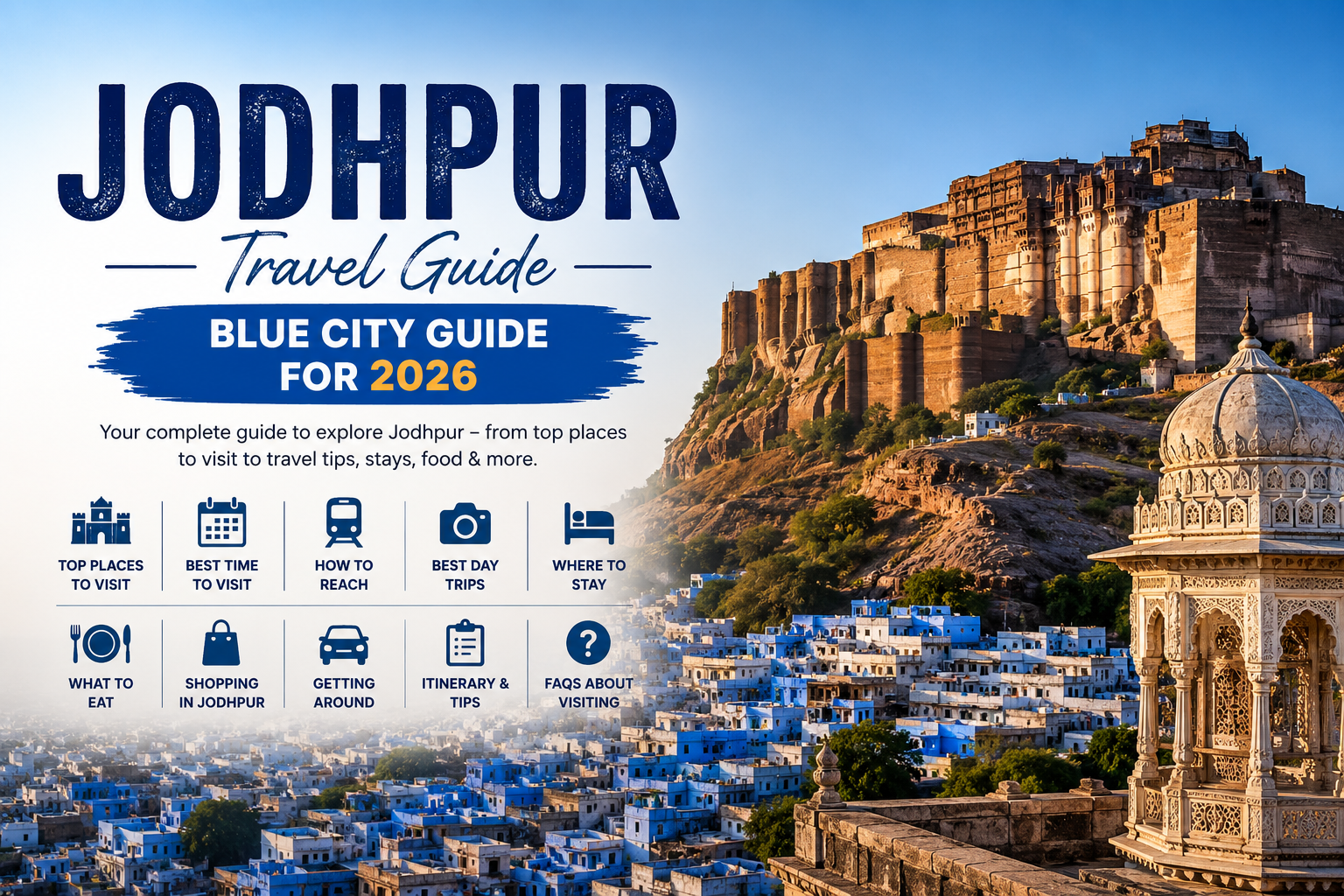
Step into Jodhpur, and the color scheme tells you everything before you even reach your hotel. A sea of indigo-washed houses spreads out beneath a fort that seems to grow straight out of the rock. That fort is Mehrangarh. Locals call the old town below it the Blue City for exactly this reason. This Jodhpur travel guide walks through everything worth knowing before you land. You’ll find the best time to visit, the top places to see, and how a private car compares with a train between cities. By the end, you’ll also have a simple two-day plan for exploring the city.
On this page:
- Why Visit Jodhpur, the Blue City
- Best Time to Visit Jodhpur
- How to Reach Jodhpur
- Top Places to Visit in Jodhpur
- Best Day Trips from Jodhpur
- Where to Stay in Jodhpur
- What to Eat in Jodhpur
- Shopping in Jodhpur
- Getting Around Jodhpur
- Sample 2-Day Jodhpur Itinerary
- Practical Tips for Foreign Tourists
- FAQs About Visiting Jodhpur
Why Visit Jodhpur, the Blue City
Jaipur leans into pink sandstone. Udaipur leans into water. Jodhpur, on the other hand, leans into scale and color. Mehrangarh towers over everything, and the old city spreads out in shades of blue below it. The desert also starts right at the edge of town. This city suits travelers who enjoy a bit of grit alongside the grandeur — busy spice markets, working stepwells, and a fort that still feels lived-in rather than roped off. Overall, two to three days gives you enough time to see it properly without rushing.
Best Time to Visit Jodhpur
October through March is your best window. Daytime highs sit in a manageable 20–28°C range, and that matters a lot in a city bordering the Thar Desert. December and January can dip cold at night, so pack a layer for evenings on rooftop restaurants.
Summer, from April through June, regularly pushes past 42°C. As a result, midday sightseeing becomes genuinely uncomfortable. Monsoon season, from July to September, brings occasional relief through rain and lower hotel rates. However, the desert landscape here doesn’t turn as green as it does further south in Udaipur.
How to Reach Jodhpur
By Air
Jodhpur Airport (JDH) connects directly to Delhi, Mumbai, Jaipur, and Udaipur. It also sits close to the city, so most transfers run under 20 minutes.
By Train
Jodhpur Junction has strong rail links to Delhi, Jaipur, Udaipur, and Mumbai. It’s also the starting point for a few well-known heritage train routes through Rajasthan.
By Road
Jodhpur sits roughly 6 hours by road from Jaipur, and around 5 hours from Udaipur. Both routes run on decent highways through classic Rajasthani countryside. For travelers stitching together a full Rajasthan circuit, a private car with a driver is often the easiest way to move between cities. You can stop at small towns, roadside dhabas, and viewpoints that a train timetable simply doesn’t allow. In fact, this is the kind of multi-city route we build custom car rentals around. It’s worth checking with us before you book separate transport for each leg.
Top Places to Visit in Jodhpur
Mehrangarh Fort
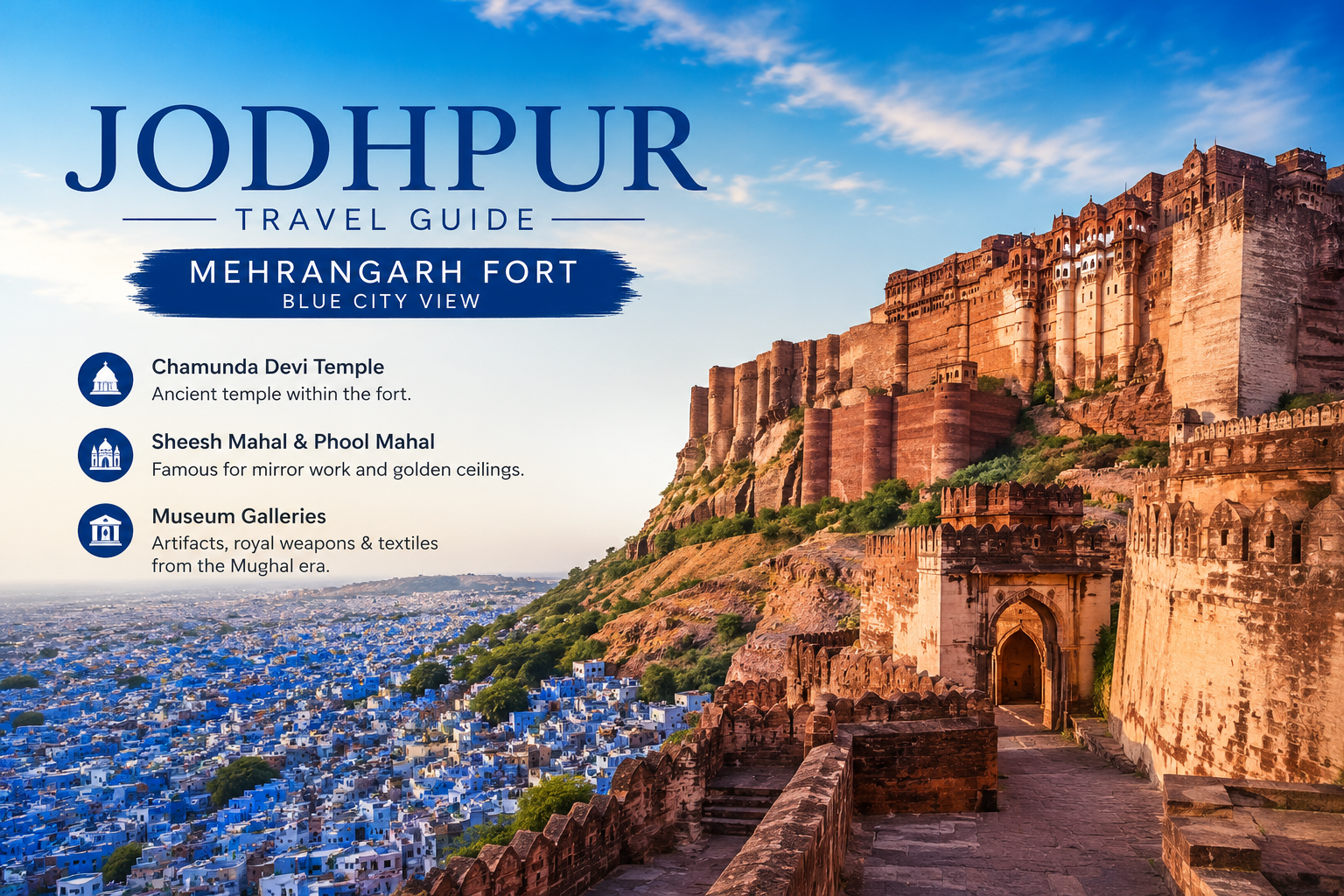
Mehrangarh sits on a rocky outcrop 400 feet above the city. It’s one of the largest and best-preserved forts in India, and construction stretches back to 1459 under Rao Jodha, the city’s founder. Author Rudyard Kipling reportedly once called it “the work of giants.” Stand at the base and look up, and it’s not hard to see why.
Visitor Information for Mehrangarh Fort:-
Timings
The fort stays open every day of the year, generally from around 9 AM to 5 PM. That said, seasonal hours can shift slightly.
Entry Fees
Foreign visitor entry usually falls in the ₹600–900 range, depending on ticket category and whether an audio guide is included. It’s worth confirming the current rate on the official Mehrangarh Museum Trust site before you go, since pricing changes.
Photography Charges
Carrying a camera inside typically adds a small separate fee. Drones also require prior permission, so check at the ticket counter if you plan to shoot video.
How to Reach the Fort
A steep road winds up from the old city. It’s walkable if you’re fit, but most visitors take a taxi or auto-rickshaw instead. Either way, expect a short walk up from the final parking area.
What to See Inside Mehrangarh Fort
Chamunda Devi Temple
This temple sits within the fort walls. It houses an idol that the city’s founder brought from Mandore in 1460, and it remains an active place of worship for many Jodhpur residents today.
Sheesh Mahal and Phool Mahal
The Sheesh Mahal, or Glass Palace, features intricate mirrored wall paintings. Next door, the Phool Mahal carries a striking gold-filigree ceiling that ranks among the grandest rooms in the fort.
Museum Galleries
Don’t skip the Daulat Khana Gallery and the Arms Gallery. Together, they hold thousands of artifacts — Mughal-era textiles, weapons, and royal palanquins that Rathore rulers collected over five centuries.
Jaswant Thada
Just below the fort sits this white marble memorial, sometimes called the “Taj Mahal of Marwar.” Builders completed it in 1899 in honor of Maharaja Jaswant Singh II. The thin marble sheets also glow faintly when sunlight hits them directly.
Umaid Bhawan Palace
Part royal residence, part heritage hotel, and part museum, Umaid Bhawan is one of the largest private homes in the world. Even if you’re not staying overnight, the museum wing welcomes visitors and is worth an hour of your time.
Clock Tower and Sardar Market
The Ghanta Ghar clock tower marks the entrance to Sardar Market. This dense, noisy stretch of spice stalls, textile shops, and street food carts shows you a much less polished, more everyday side of Jodhpur.
Toorji Ka Jhalra Stepwell
This beautifully restored 18th-century stepwell now sits surrounded by cafes. It’s one of the more relaxed, photogenic corners of the old city to take a break in.
Best Day Trips from Jodhpur
Osian
Osian sits around 65 km northwest of the city. This small desert town is known for its cluster of Hindu and Jain temples, some dating back over a thousand years. Nearby sand dunes also make it a good spot for a short camel or jeep safari.
Bishnoi Village Safari
A half-day trip into Bishnoi villages gives you a look at rural Rajasthani life, local pottery, and weaving traditions. You’ll also stand a decent chance of spotting blackbuck antelope, which the Bishnoi community has long protected.
Where to Stay in Jodhpur
Luxury
Umaid Bhawan Palace itself operates as a heritage hotel for part of its wings. A handful of other fort-view properties also offer rooftop pools overlooking the Blue City. Expect rates upward of ₹20,000 per night.
Mid-Range
Boutique havelis in the old city typically run ₹3,500–7,000 per night. Many also have rooftop restaurants facing Mehrangarh, which makes them some of the best-value views in town.
Budget
Guesthouses cluster around the clock tower area, with dorm beds from roughly ₹500 and private rooms around ₹1,000–1,500. This location also puts you within easy walking distance of the fort and markets.
What to Eat in Jodhpur
Jodhpur has a distinct food identity within Rajasthan. Local dishes include mirchi bada, a stuffed and battered chili fritter, along with pyaaz kachori. Makhaniya lassi, a rich, saffron-topped yogurt drink, is practically a local institution near the clock tower. For a full meal, try dal baati churma or a Marwari thali. Finally, save room for a plate of mawa kachori.

Shopping in Jodhpur
Sardar Market and the surrounding lanes are good for spices, textiles, and antiques. Jodhpur is also known regionally for wooden handicrafts and blue pottery. As with most Rajasthan markets, bargaining is expected, so start low and settle somewhere in the middle.
Getting Around Jodhpur
The old city is dense and largely walkable, especially near Sardar Market or the base of the fort. However, the steep climb up to Mehrangarh and the distance to Umaid Bhawan or Osian make a private car genuinely useful. If a driver is already carrying you through the rest of Rajasthan, keep that same car in Jodhpur too. Doing so avoids the hassle of negotiating auto-rickshaw fares for every stop.
Sample 2-Day Jodhpur Itinerary
Day 1
Spend the morning at Mehrangarh Fort, allowing at least three hours for the galleries and ramparts. Afterward, walk down to Jaswant Thada and grab lunch near the clock tower. Then spend the evening wandering Sardar Market before dinner on a rooftop facing the fort.
Day 2
Visit Umaid Bhawan Palace in the morning, followed by Toorji Ka Jhalra stepwell for a relaxed coffee break. In the afternoon, head out to Osian or a Bishnoi village safari, then return for a final evening in the old city.
Jodhpur Travel Guide: Practical Tips for Foreign Tourists
Carry cash for market stalls and smaller cafes, since card acceptance is inconsistent outside hotels and larger restaurants. Mehrangarh and most major sites shut by 5 PM, so plan an early start if you want to see everything in a day. Also, dress modestly at temples, and be ready to remove your shoes at entrances. Most travelers find Jodhpur safe and welcoming, including solo visitors, though the usual after-dark precautions still apply in less touristy areas. For up-to-date entry fees and timings at Mehrangarh, check the Mehrangarh Museum Trust website directly. For broader trip planning, the Rajasthan Tourism website is also a solid reference.
FAQs About Visiting Jodhpur:-
Why is Jodhpur called the Blue City?
Local Brahmin households traditionally painted their homes blue. Other residents later adopted the color too, partly because many believed it helped repel heat and insects. Seen from Mehrangarh’s ramparts, the effect is unmistakable.
How many days do I need in Jodhpur?
Two full days cover Mehrangarh, Jaswant Thada, Umaid Bhawan, and the old city markets comfortably. Add a third day if you want to include a day trip to Osian or a Bishnoi village safari.
Is Jodhpur worth visiting along with Jaipur and Udaipur?
Yes. Jodhpur, Jaipur, and Udaipur together form one of the strongest Rajasthan circuits, and each city offers a distinctly different character. The road distances between them also work well for a single multi-city trip by private car.
What is the entry fee for Mehrangarh Fort?
Foreign visitor tickets generally fall in the ₹600–900 range, depending on category. That said, it’s best to confirm current pricing on the official Mehrangarh site before you travel, since rates change periodically.
Is Jodhpur safe for solo travelers?
Yes, most travelers consider Jodhpur one of the more welcoming Rajasthan cities for solo visitors, including women. Standard precautions still apply, such as sticking to well-lit, populated areas after dark and using registered taxis.
Final Thoughts
Jodhpur rewards a slower pace. The fort alone is worth an entire morning, and the side streets and stepwells easily fill a second day. Combine it with Jaipur and Udaipur for a complete Rajasthan circuit. Also, consider a private car for the drives between cities — the desert scenery along the way is worth the extra hours on the road. If you’d like help building this into a full itinerary with car rentals included, get in touch, and we’ll put together a plan around your dates. Our guides to Udaipur and Rajasthan Heritage Tours are also worth a look if you’re planning the rest of the trip.