
There is no city in India quite like Varanasi. Possibly no city in the world quite like it either. This Varanasi travel guide was put together because most visitors arrive here expecting something spiritual and leave having experienced something they cannot fully explain — even to themselves.
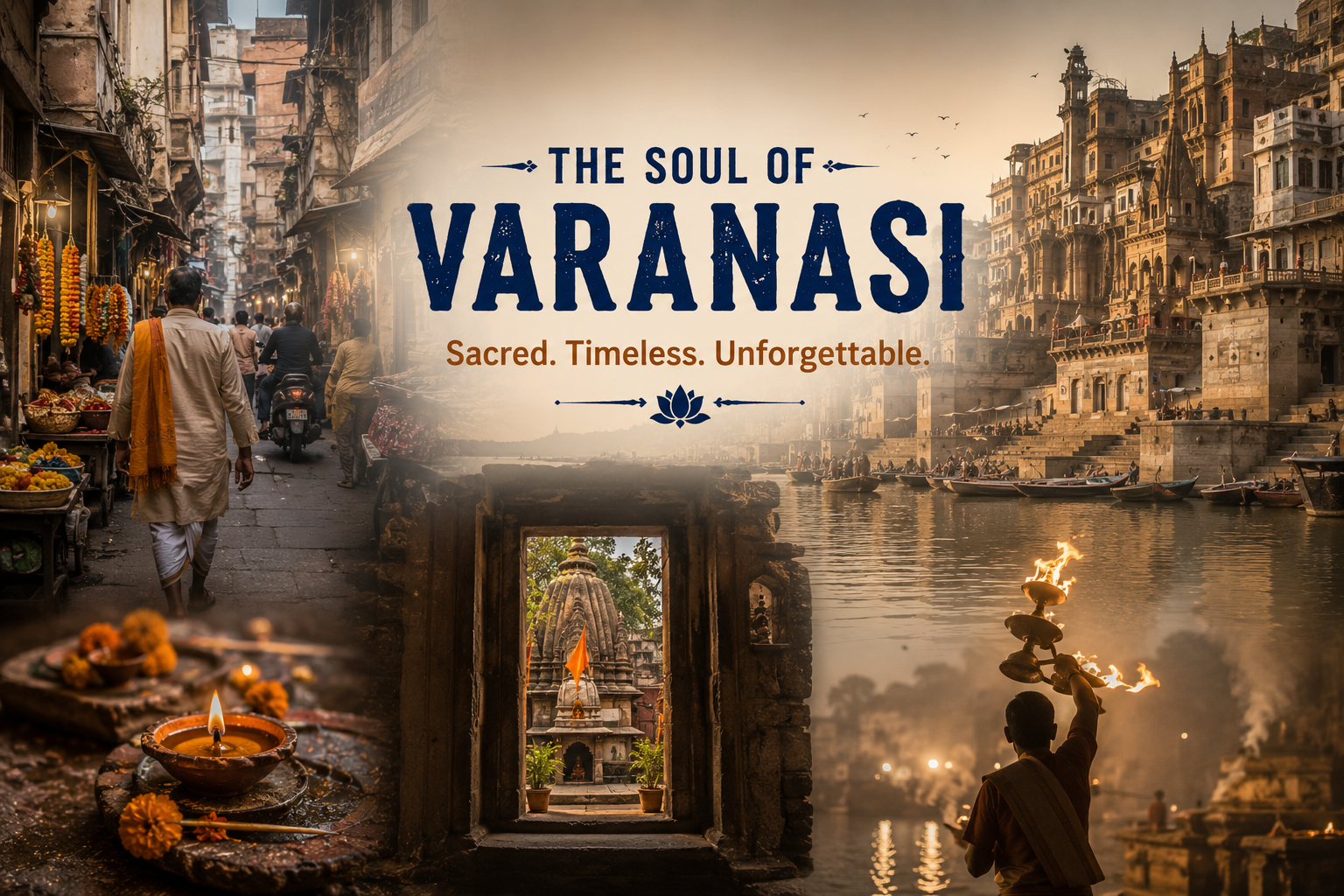
Varanasi is one of the oldest continuously inhabited cities on earth. People have been living here, praying here, dying here, for over 3,000 years. The Ganges river runs along its western edge. Hundreds of ghats — wide stone steps leading down to the water — line the riverbank for kilometres. Every morning before sunrise, boats move slowly through the mist while priests perform rituals on the steps and the city slowly wakes up around them.
If you are travelling through North India — finishing a Golden Triangle tour or planning a longer India itinerary — Varanasi belongs on your list. This guide covers everything from when to visit and what to see, to where to eat, how to stay safe, and what nobody tells you before you arrive.
Why Varanasi Feels Different From Every Other City in India
Most Indian cities have a rhythm you can eventually figure out. Varanasi refuses to cooperate with that logic. The old city — the part that actually matters — is a dense, winding maze of lanes so narrow that two people with bags can barely pass each other. There are no cars inside. Motorcycles squeeze through while vendors sell marigolds and milk sweets from carts pushed up against ancient temple walls.
Every few metres something stops you. A doorway that opens into a courtyard with a temple inside. A chai stall where four old men have apparently been sitting since before you were born. A sudden clearing and then the river, enormous and grey-green, spreading out in front of you.
This is not a city you visit and immediately understand. It is a city you visit and spend years thinking about afterward.
What Makes Varanasi Sacred — And Why It Matters for Visitors
Varanasi — also called Kashi or Banaras — is one of the seven sacred cities of Hinduism. Hindus believe that dying here brings moksha, liberation from the cycle of rebirth. This is not a metaphor or a distant theological idea. It is a belief that actively shapes daily life in the city. People come here specifically to die. Families bring their elderly relatives. The burning ghats — where cremations happen openly on the riverbank — operate around the clock, every single day of the year.
Understanding this before you arrive changes how you move through the city. You are not a tourist observing an attraction. You are a visitor inside one of the most sacred and emotionally significant places in the country. That deserves a certain kind of attention.
Best Time to Visit — The Most Critical Section of This Varanasi Travel Guide
October to March — When Varanasi Is at Its Best
This is peak season and the weather makes it obvious why. Temperatures stay between 10°C and 25°C, mornings on the river are cool and atmospheric, and the city is easier to walk through without the weight of summer heat pressing down on everything.
The Dev Deepawali festival, which falls in November, is one of the most visually extraordinary events in all of India — the entire riverbank is lit with hundreds of thousands of oil lamps. If your dates are flexible, this alone is worth building a trip around.
April to June — Not Recommended
Heat in Varanasi during summer is intense and humid in a way that is different from dry desert heat. Temperatures cross 45°C and the narrow lanes of the old city, which have almost no shade, become genuinely difficult to move through. Avoid this window if you have any choice.
July to September — Monsoon Has Its Own Kind of Beauty
The Ganges swells dramatically during monsoon. Some ghats go partially underwater. The heat breaks. Crowds thin out and prices drop. For photographers and travellers who prefer solitude, this can actually be a rewarding time to visit — just come prepared for rain and high humidity.
Top Things to See and Do — A Complete Varanasi Travel Guide to the Ghats and Beyond
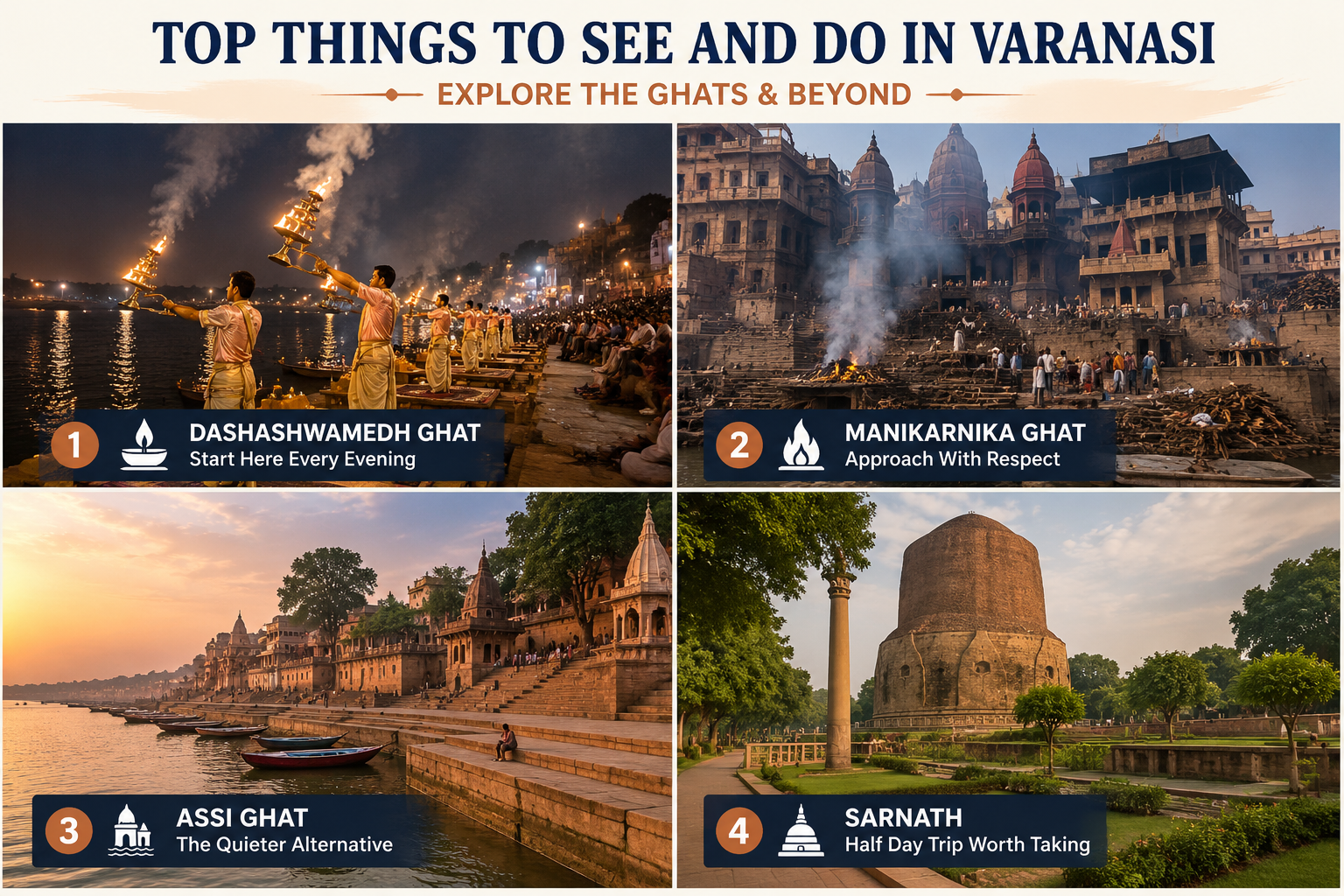
Dashashwamedh Ghat — Start Here Every Evening
This is the main ghat, the most famous, and the site of the Ganga Aarti — a fire ceremony performed every single evening at sunset by a group of priests standing in a row along the steps. Bells ring, incense burns, enormous brass lamps are swung in slow circular movements, and the river reflects all of it back.
It is crowded. It is loud. It is overwhelming in the best possible way.
Arrive at least 30 minutes early to find a good spot on the steps or hire a boat to watch from the water. The boat view is worth the extra cost.
Manikarnika Ghat — Approach With Respect
Manikarnika is the main cremation ghat. Bodies wrapped in orange and white cloth are carried down to the water on bamboo stretchers, dipped in the Ganges, and then placed on funeral pyres that burn through the night. Smoke hangs in the air constantly. Stacks of wood line the lanes leading to the ghat.
Photography is strictly prohibited here. Do not take photos, do not point, do not react loudly. Move quietly, observe respectfully, and understand that you are witnessing something real — not a performance.
Assi Ghat — The Quieter Alternative
At the southern end of the ghat stretch, Assi Ghat is where the city breathes a little. Fewer crowds, more space on the steps, and a morning aarti that is smaller and more intimate than the one at Dashashwamedh. A lot of longer-term visitors to Varanasi end up spending most of their time here.
Sarnath — Half Day Trip Worth Taking
About 10 kilometres from the old city, Sarnath is where the Buddha delivered his first sermon after attaining enlightenment. The Dhamek Stupa, dating back to the 5th century, still stands at the site. The archaeological museum here holds some of the finest Buddhist sculpture you will find anywhere in India, including the original Lion Capital that became India’s national emblem.
Most people skip Sarnath. Most people are missing something genuinely significant.
Tip for First-Time Visitors
Book a guided walking tour of the old city on your first morning. The lanes are disorienting without local knowledge and a good guide will show you things — hidden temples, rooftop views, small workshops making Banarasi silk — that you would never find alone.
Where to Eat in Varanasi
The Food Scene Is Better Than Most Visitors Expect
Varanasi has a strong street food identity that goes well beyond what tourist cafes serve.
Kachori sabzi — deep fried bread served with a spiced potato curry — is the standard Varanasi breakfast and you will find it at small stalls near almost every major ghat from early morning. Banarasi paan — betel leaf stuffed with various fillings — is something you try at least once. The famous lassi shops near Vishwanath Gali serve thick, cold lassi in clay cups that has been drawing visitors for decades.
For sit-down meals, Pizzeria Vaatika Cafe near Assi Ghat and Aadha-Aadha near Dashashwamedh Ghat both serve reliable food at reasonable prices and are consistently popular with foreign visitors.
One Thing Worth Knowing About Varanasi Food
Varanasi is a deeply religious city and beef is not served anywhere in the old city. The food culture is predominantly vegetarian. This is not a restriction — the vegetarian food here is genuinely excellent and you will not feel the absence.
How to Get to Varanasi
By Flight
Lal Bahadur Shastri International Airport connects Varanasi to Delhi, Mumbai, and several other Indian cities. Flight time from Delhi is approximately one and a half hours. This is the fastest option for visitors coming from far.
By Train
Varanasi Junction is well connected to Delhi, Agra, Kolkata, and Mumbai. Several overnight trains run from Delhi — the Kashi Vishwanath Express and the Vibhuti Express are both popular choices. Book through IRCTC in advance, particularly during October to February when seats fill quickly.
Practical Tips for Visiting Varanasi
- Hire a boat at sunrise. Watching the ghats from the river in the early morning is one of the most memorable things you can do in India. Negotiate the price before you get in — around INR 300 to 500 for an hour is reasonable.
- Dress conservatively. This applies especially near temples and cremation ghats. Shorts and sleeveless tops draw unnecessary attention in the old city.
- Watch for touts near ghats. If someone approaches you offering a “free” silk shop visit or a “special” boat ride, it is not free. Politely decline and keep walking.
- Keep your phone in your pocket near crowds. The narrow lanes get very crowded, particularly during festivals. Pickpocketing happens.
- Carry cash. ATMs exist but smaller vendors, boat operators, and street food stalls are cash only.
- Respect the burning ghats. No photographs, no pointing, no loud reactions. This is genuinely important.
How Many Days Do You Need?
One day: Sunrise boat ride, walk the ghats, evening Ganga Aarti. You will scratch the surface.
Two days: Add Sarnath, explore the old city lanes on foot, sit at Assi Ghat in the morning. This is the minimum to actually feel the city.
Three days or more: Slow down. Wander without an agenda. Take a Banarasi silk weaving workshop. Watch a classical music performance. This is when Varanasi starts to make a different kind of sense.
Conclusion:
Varanasi does not fit neatly into a travel itinerary. It is not the kind of place you can fully prepare for or completely understand from a distance. Use this Varanasi travel guide as your starting point — for the logistics, the timing, the practical details. But leave space for the city to surprise you, because it will.
For help planning the rest of your India trip, our India travel cost guide for foreigners and common tourist mistakes to avoid in India are worth reading before you go. Whatever this Varanasi travel guide helps you organise — the experience itself is something no guide can hand you.