
Golden Triangle Tour India: Complete Travel Guide (2026)
The Golden Triangle Tour India is one of the most popular travel routes for foreign tourists visiting the country for the first time. India hits differently for everyone. Some people walk off the plane and feel overwhelmed. Others feel like they’ve returned home. But almost everyone agrees — if you’re visiting India for the first time, the Golden Triangle is where you start.
This route connects three cities — Delhi, Agra, and Jaipur — and manages to pack centuries of history, stunning food, chaotic markets, and architecture you genuinely cannot prepare yourself for, all into one compact journey.
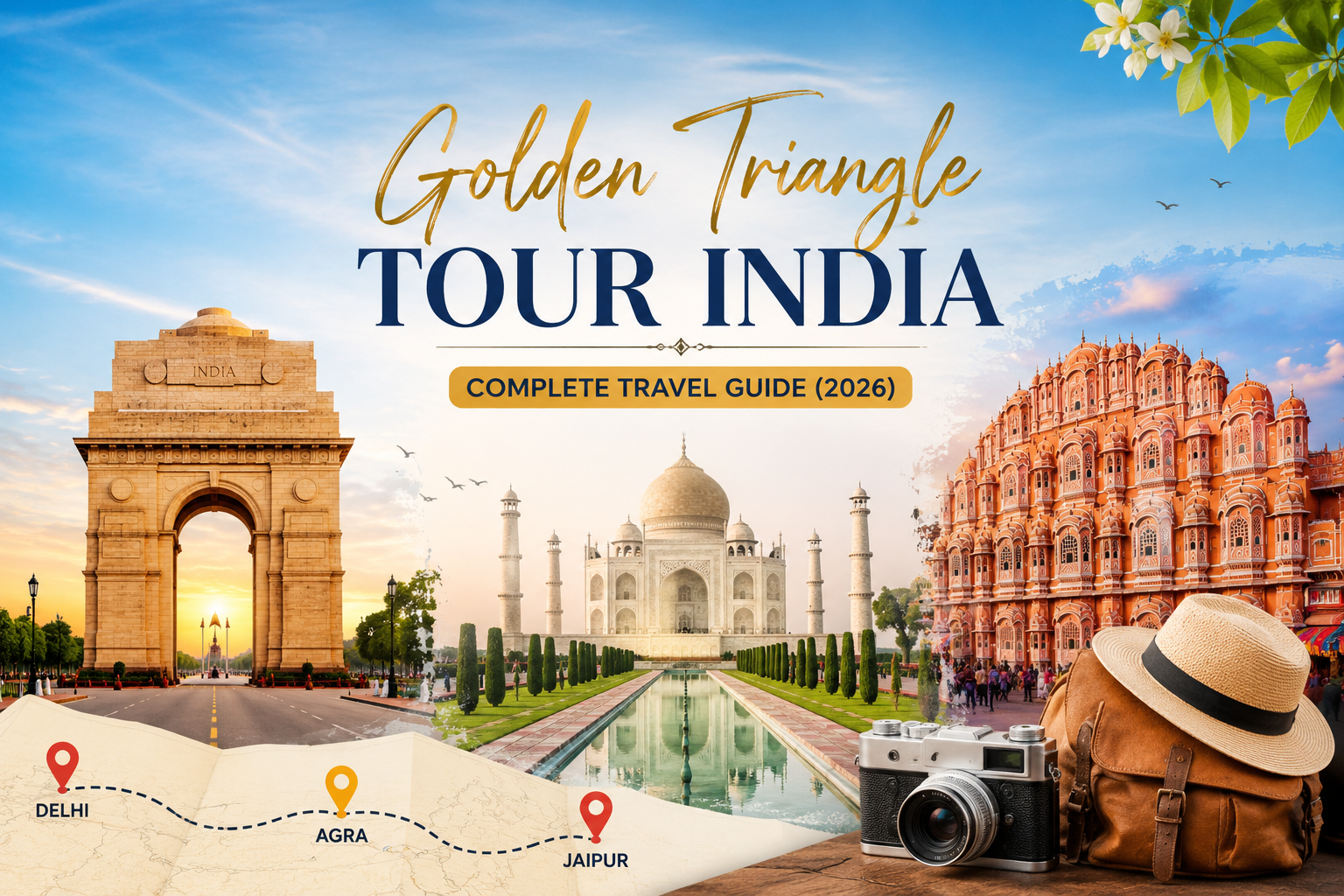
What is the Golden Triangle Tour India?
Draw a line from Delhi down to Agra, cut across to Jaipur, and head back north to Delhi. That triangle on the map is worth more than most people realize.
Delhi is the capital — loud, layered, constantly in motion. Agra is quieter but carries the weight of the Taj Mahal on its shoulders. Jaipur is royal, colorful, and defiantly old-world despite every attempt at modernization.
Most travelers cover this circuit in 5 to 8 days. Some stretch it further by adding Varanasi, Ranthambore, or Udaipur. Both approaches work — it really depends on how much time you can pull away.
Why This Route Works So Well
It actually shows you three different Indias.
Delhi gives you the republic — government, monuments, colonial echoes, and a street food scene that will ruin you for everything else. Agra is Mughal India at its absolute peak. Jaipur is Rajput royalty, and it wears that identity with pride.
Beyond the culture, the logistics are easy. All three cities are connected by expressways and fast trains. You’re never more than a few hours from the next stop, which matters more than people think when you’re already tired from sightseeing.
Best Time to Visit Golden Triangle Tour India
October through March is the window you want. Days are clear, temperatures stay manageable — usually between 10°C and 28°C — and evenings can get genuinely cold in December and January, which catches a lot of visitors off guard. Pack a light jacket.
April to June is brutal. Agra and Jaipur in May feel like standing inside an oven. If this is your only option, front-load your days and stay inside from noon to 4 PM.
July to September brings the monsoon. The landscapes turn green, prices drop, and crowds thin out considerably. Rain is usually short and intense rather than all-day. Not a bad time to visit if you don’t mind occasional wet afternoons.
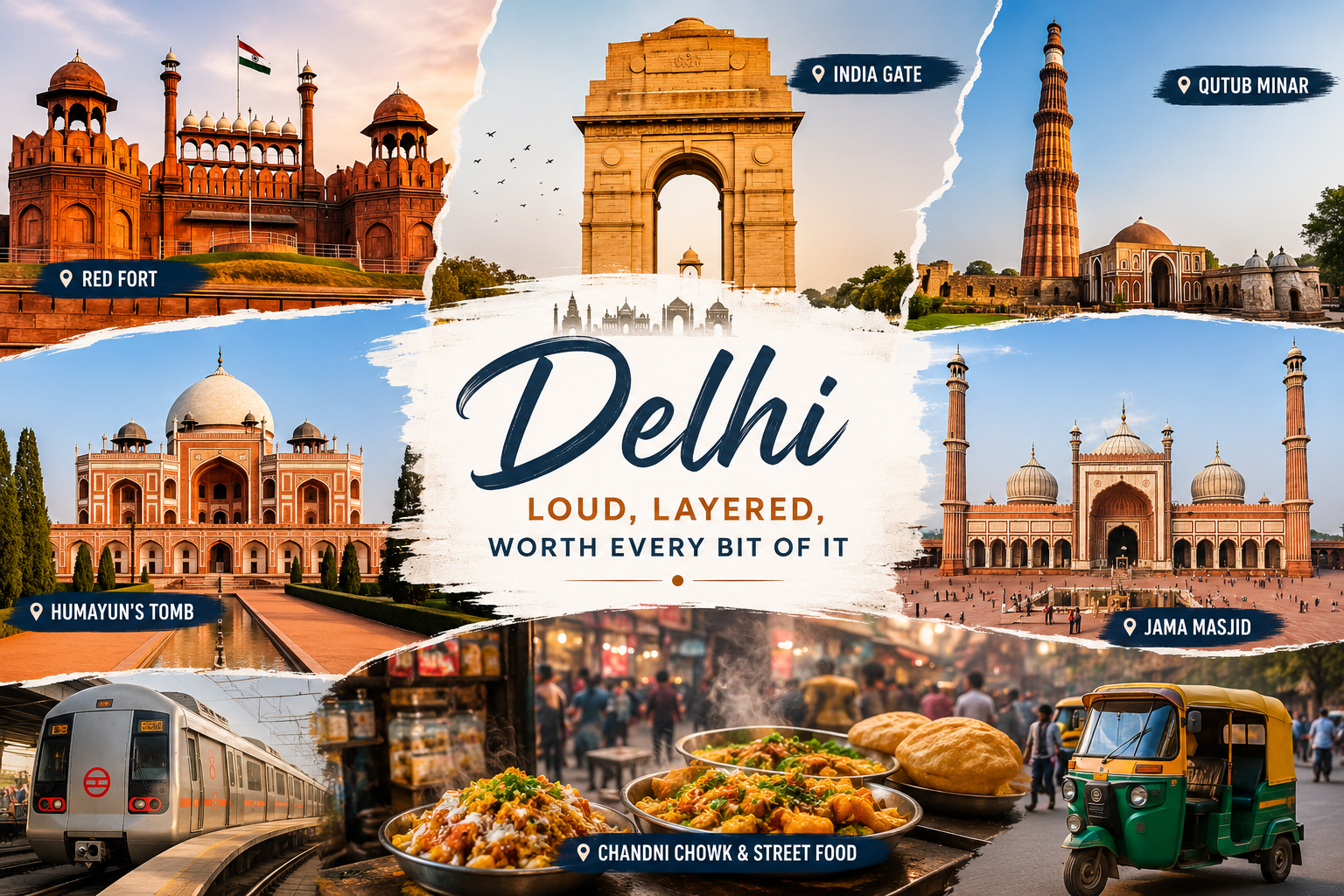
Delhi — Loud, Layered, Worth Every Bit of It
Delhi doesn’t ease you in. It throws everything at you at once — traffic, noise, smells, color — and somehow that chaos is exactly what makes it unforgettable.
Red Fort
This is where India declared independence in 1947. The walls are made from red sandstone and they stretch for two kilometers. Walk through the main gate and the scale hits you immediately.
India Gate
A war memorial that honors 84,000 soldiers of the British Indian Army. At night, with the monument lit up and families spread across the lawns, it feels strangely peaceful for such a busy city.
Qutub Minar
Built in 1193, it’s still the tallest brick minaret in the world. The inscriptions carved into the stone are remarkably detailed for something over 800 years old.
Humayun’s Tomb
Most people treat this as a warm-up for the Taj Mahal. That undersells it. The symmetry here is extraordinary, and the garden layout directly inspired what Shah Jahan eventually built in Agra.
Jama Masjid
One of the largest mosques in India. Go on a Friday if you can. The courtyard alone holds 25,000 people and the view from the minaret covers most of Old Delhi.
Chandni Chowk and Street Food
Don’t skip this. Walk through the lanes, eat something you can’t identify from a stall that looks like it shouldn’t work, and buy absolutely nothing until you’ve walked the full length. Prices at the entry points are always higher.
Try butter chicken, chole bhature, paranthe from Paranthe Wali Gali, and whatever the vendor next to you is eating.
Agra — The City That Lives in One Building’s Shadow
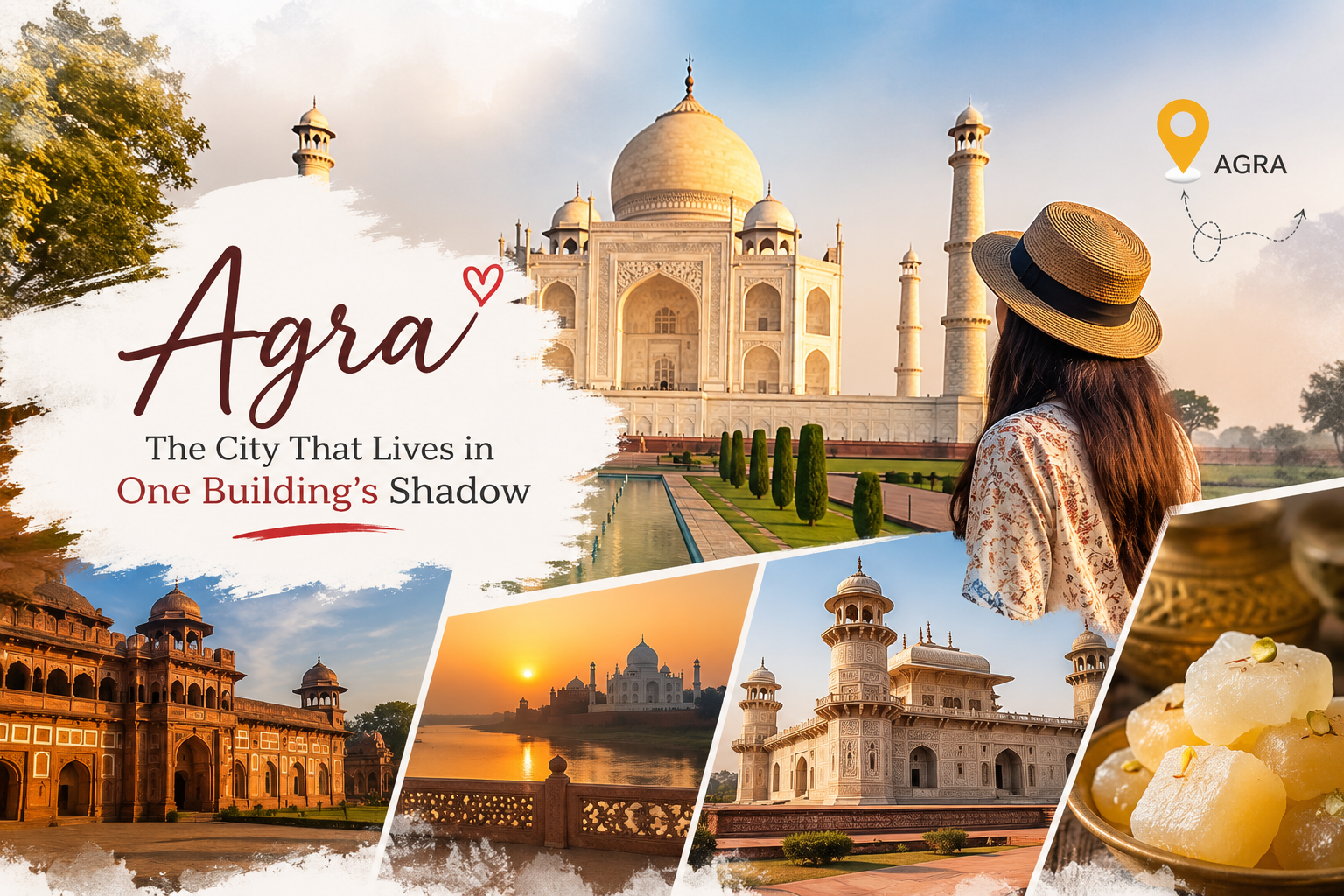
Agra exists, for most tourists, as a backdrop to the Taj Mahal. That’s a little unfair to the city, which has genuine depth — but also, honestly, the Taj Mahal deserves most of that attention.
The Taj Mahal
Shah Jahan built it between 1632 and 1653, after his wife Mumtaz Mahal died during childbirth of their fourteenth child. Twenty thousand workers. Marble sourced from Makrana, Rajasthan. Precious stones inlaid from across Central Asia and Persia.
The building looks different at every hour. At sunrise it’s pale pink. Midday it turns blinding white. By late afternoon it starts picking up gold. If you only visit once, go early — the light is better and the crowds haven’t fully arrived.
Agra Fort
About three kilometers from the Taj, this fort was the main residence of Mughal emperors before the capital shifted to Delhi. The walls are 20 meters high and made from the same red sandstone as Delhi’s Red Fort. Shah Jahan himself was imprisoned here by his son Aurangzeb and spent his final years looking at the Taj Mahal from a distance.
Mehtab Bagh
A garden on the opposite bank of the Yamuna river. The Taj Mahal sits directly across. Sunset from here is genuinely one of the better views you’ll find anywhere in India, and it’s far less crowded than the main complex.
Tomb of Itimad-ud-Daulah
Called the Baby Taj by most visitors. Built before the Taj Mahal, it was the first Mughal structure made entirely from white marble. The inlay work — colored stone set into the marble in geometric patterns — is extraordinary up close.
What to Eat in Agra
Petha is the thing to buy. It’s a translucent candy made from white pumpkin, available in dozens of flavors across the city. For meals, go for Mughlai cuisine — rich curries, seekh kebabs, and biryanis that reflect four centuries of royal cooking tradition.
Jaipur — The Pink City
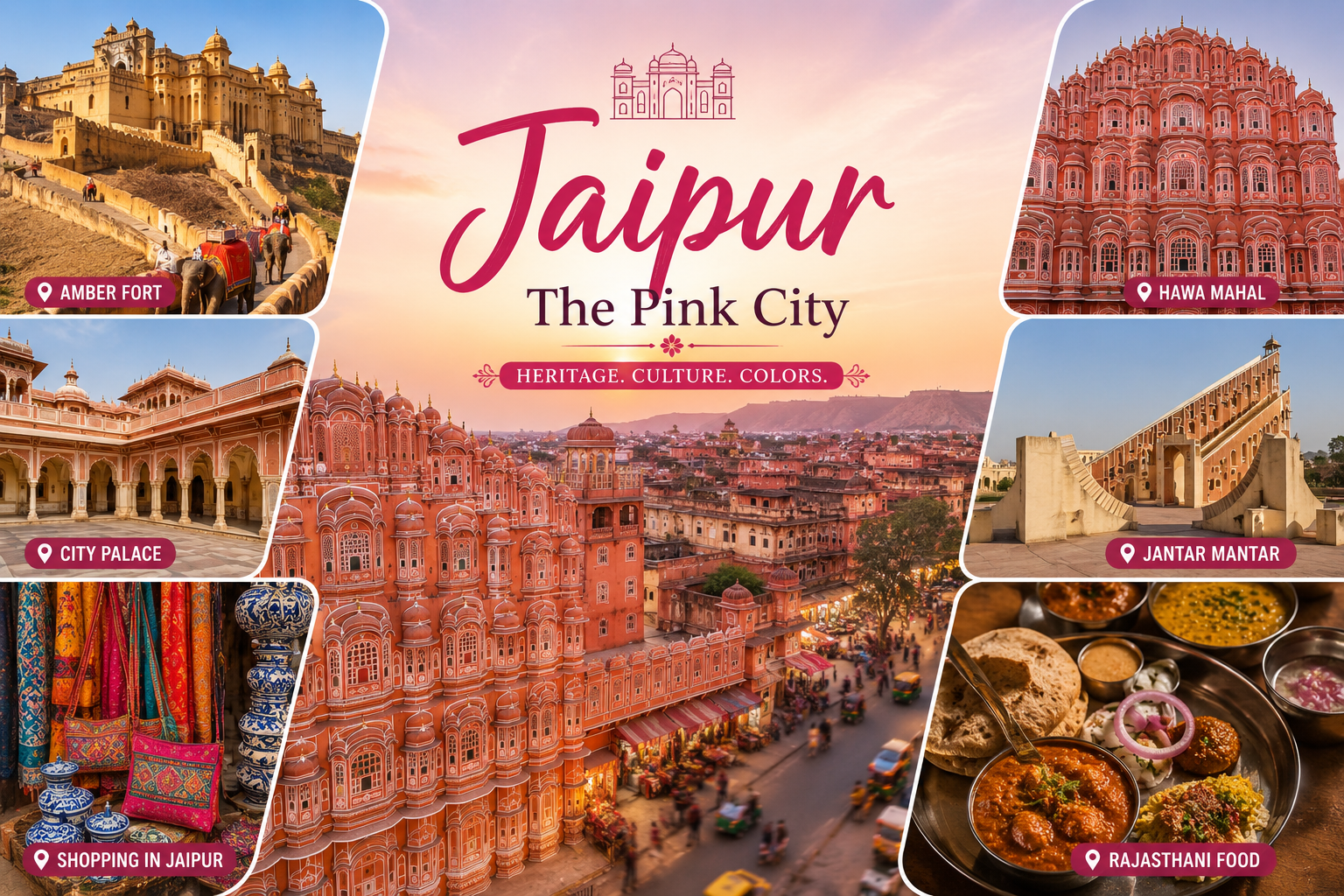
Jaipur was painted pink in 1876 to welcome the Prince of Wales. The color stuck. Drive into the old city today and you’ll see why it works — the entire walled area is the same warm terracotta shade, and in the late afternoon light, it’s genuinely striking.
Amber Fort
About 11 kilometers from the city center. Perched on a hill above Maota Lake, the fort took 100 years to complete and served as the main residence of the Rajput rulers. The Sheesh Mahal — a hall lined entirely with mirror work — is the standout room inside. Go early before tour groups arrive.
City Palace
Still partially occupied by the Jaipur royal family. The public sections include a museum with an impressive collection of royal artifacts, weapons, and textiles. The courtyard architecture is a blend of Rajput and Mughal styles that shouldn’t work as well as it does.
Hawa Mahal
Five stories, 953 windows, and it’s only one room deep. It was built so the women of the royal household could observe street life without being seen. The honeycomb facade is the most photographed thing in Jaipur, and for good reason — it looks unlike anything else.
Jantar Mantar
A UNESCO World Heritage Site and not what most people expect. It’s an open-air astronomical observatory built in the early 1700s by Maharaja Jai Singh II. The largest sundial in the world is here, accurate to two seconds. Worth an hour of your time even if you’re not particularly interested in astronomy.
Shopping in Jaipur
Jaipur is one of the better shopping cities in India. Blue pottery is made nowhere else quite like this. Block-printed textiles are sold everywhere but quality varies enormously — go to the government emporium first to understand what good work looks like, then buy from smaller shops.
Johari Bazaar for jewelry, Bapu Bazaar for textiles, and Tripolia Bazaar for traditional lac bangles and crafts.
Rajasthani Food
Dal Baati Churma is the meal you should sit down for at least once. Dal is the lentil curry, baati are hard wheat dumplings baked over charcoal, and churma is a sweet crumbled wheat mixture. It sounds simple and tastes like nothing simple at all.
Gatte ki Sabzi is a curry made from chickpea flour dumplings — dry and a little sour, and very good with roti. Laal Maas is the meat dish: slow-cooked in a sauce of red chilies and yogurt. It’s genuinely spicy.
A Workable 6-Day Itinerary
Day 1 — Arrive in Delhi Get in, get oriented. India Gate, Qutub Minar, and the surrounding area if you have energy. Keep it light.
Day 2 — Old and New Delhi Red Fort, Jama Masjid, Chandni Chowk. Then cross to Humayun’s Tomb in the afternoon. End the day with a meal somewhere in the Lodi Colony area.
Day 3 — Delhi to Agra Leave early. You want to reach the Taj Mahal by mid-morning. Spend a few hours there, then visit Agra Fort. Sunset at Mehtab Bagh if you have the energy.
Day 4 — Agra to Jaipur Stop at Fatehpur Sikri on the way — it’s a ghost city built by Akbar in 1571, abandoned after 14 years due to water problems. Takes about an hour and is worth it. Arrive Jaipur by evening.
Day 5 — Jaipur Sightseeing Amber Fort in the morning. City Palace and Hawa Mahal after lunch. Jantar Mantar before closing time.
Day 6 — Markets and Departure Morning in the bazaars. Pick up what you want to bring home. Return to Delhi by train or car.
Travel Tips Worth Actually Following
Book trains in advance. The Gatimaan Express from Delhi to Agra and the double-decker trains toward Jaipur fill up fast during peak season. Don’t leave this to the last day.
Hire a guide at monuments. Context matters here. The Taj Mahal is more interesting when someone explains the geometry, the inlay techniques, and the story behind specific panels. Most sites have accredited guides at the entrance.
Water and heat. Drink bottled water consistently, especially in summer. Don’t skip this and then wonder why you feel terrible on day three.
Dress modestly at religious sites. This means covering shoulders and knees at mosques and temples. Most sites will have cloth available to wrap around yourself, but bringing a scarf is easier.
Digital document copies. Keep your passport, visa, and insurance details accessible on your phone. Hotel check-ins across India increasingly ask to photograph your documents.
Estimated Cost
Budget travel: $250–$500 per person. Guesthouses, shared transport, local restaurants.
Mid-range: $600–$1,200 per person. Comfortable hotels, private car between cities, some restaurant meals.
Luxury: $1,500 and up. Heritage hotels, private guides, premium transport throughout.
These ranges include accommodation, transport, food, and entrance fees. Flights to Delhi are separate.
Frequently Asked Questions
How many days do you actually need?
Six days is comfortable. Five is doable if you’re efficient. Seven gives you room to breathe and revisit anything you liked.
Is it suitable for first-time visitors to India?
It’s the most practical starting point, yes. The infrastructure is solid, English is widely spoken in tourist areas, and the concentration of major sites means you’re not spending most of your time in transit.
Best month?
November through February. The weather is consistently good and the light for photography is excellent in the mornings.
Can you do it solo?
Without any issue. This is one of the most traveled tourist routes in the country. Resources, other travelers, and support are available at every stop.
Is the Taj Mahal always part of the itinerary?
Yes. Visiting Agra without seeing the Taj Mahal would be like going to Paris and skipping the Eiffel Tower — technically possible, practically unthinkable.
Final Thought
The Golden Triangle isn’t perfect. Some parts feel overrun with tourists. Agra’s main road around the Taj can be aggressively commercial. Jaipur traffic is relentless.
None of that matters much once you’re actually inside these places. The Red Fort at dusk, the Taj at sunrise, Amber Fort on a clear morning — these things are genuinely moving, and no amount of tourism infrastructure has managed to diminish that yet.
Come with comfortable shoes, a flexible schedule, and an appetite. India will handle the rest.